What I Made With My Neighbor’s Free Crab Apples: Jam & Homemade Vinegar 🍎
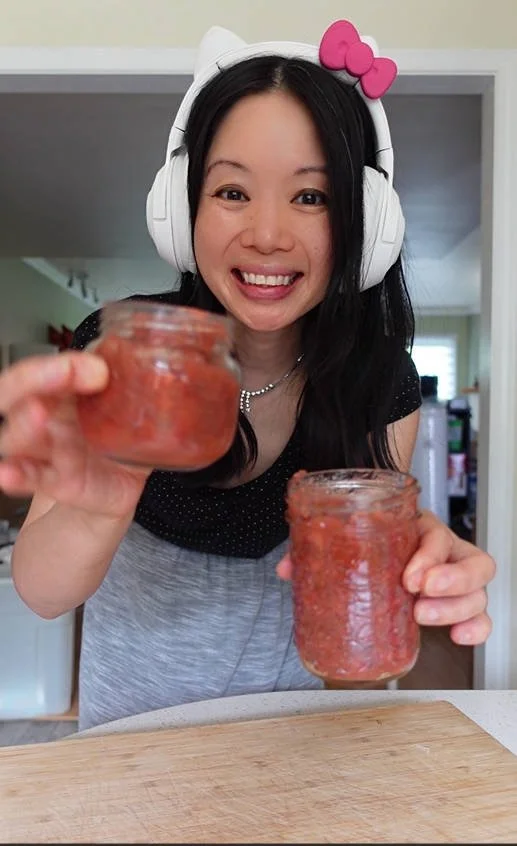
My neighbor has a crab apple tree that produces so many apples, and she doesn't use them. One day she told me to take as many as I wanted, and of course, I wasn't going to say no!
I've never made crab apple jam before, so I started looking at recipes. The first thing I noticed was just how much sugar many recipes called for. Some recipes use almost a one-to-one ratio of fruit and sugar.
That didn't really appeal to me.
I don't mind sugar in moderation, but I didn't want to turn these beautiful little apples into something that was basically half fruit and half sugar. So I decided to experiment and make a lower-sugar crab apple jam using chia seeds to help thicken it.
And the best part? These apples were completely free!
Why I Love Making Food From What Would Otherwise Be Wasted
This is exactly the kind of thing I love about living a more frugal lifestyle.
My neighbor wasn't using the crab apples. They could have ended up on the ground, in the garbage, or in the compost.
Instead, they became jars of homemade jam.
A small jar of jam at the grocery store can easily cost around $6 these days, so turning something that was going to be discarded into homemade jam feels like a pretty great deal.
And I didn't stop at the jam.
I also saved the tops and bottoms and other scraps I cut off the apples and used them to make homemade crab apple vinegar.
That's my favorite kind of frugal cooking: use what you have, waste as little as possible, and make something delicious along the way.
🍎 Low-Sugar Crab Apple Chia Jam
This isn't a traditional shelf-stable jam. Because we're using much less sugar, the jam should be stored in the freezer.
I like freezing it in small jars or containers. That way, whenever I want jam, I can take out one small jar and keep it in the refrigerator. Since it's a small amount, we'll use it within a couple of weeks.
Ingredients
4 cups crab apples, washed, cored and chopped
½ to 1 cup sugar, depending on how tart your crab apples are
¼ cup water
2 tablespoons chia seeds
1 tablespoon lemon juice
Instructions
Prepare the crab apples.
Wash the crab apples well. Remove the stems, blossom ends and cores, then chop the apples into small pieces.Cook the apples.
Add the crab apples, water, sugar and lemon juice to a saucepan. Cook over medium-low heat, stirring occasionally, until the apples become very soft and begin to break down.Adjust the texture.
If you like a smoother jam, mash the apples with a potato masher or use an immersion blender. I personally like leaving a little texture.Add the chia seeds.
Stir in the chia seeds and cook for another 1–2 minutes.Let it thicken.
Remove from the heat and let the jam sit for about 10–15 minutes. The chia seeds will absorb some of the liquid and thicken the jam.Cool and freeze.
Once completely cool, transfer the jam into clean, freezer-safe small jars or containers. Leave some room at the top for expansion and freeze.When you're ready to eat it, thaw one jar in the refrigerator. Once thawed, keep it refrigerated and use it promptly.
How I Use It
This is delicious on toast, sourdough bread, pancakes, oatmeal or even stirred into yogurt.
And because I made small jars, I don't have to thaw a huge batch every time I want some.
Free fruit + a little sugar + chia seeds = homemade jam for a fraction of the grocery-store price.
🍏 Homemade Crab Apple Scrap Vinegar
And now for my favorite part: the scraps!
Instead of throwing away the tops, bottoms and other edible scraps I removed while preparing the apples, I put them to work too.
You can use crab apple scraps to make a naturally fermented fruit vinegar.
Ingredients
Crab apple scraps, enough to loosely fill a clean jar
Water, enough to completely cover the scraps
1 tablespoon sugar per cup of water
Instructions
Fill your jar.
Place your clean crab apple scraps into a clean glass jar. Don't pack them too tightly.Add the sugar water.
Mix the sugar into your water and pour it over the apple scraps until everything is completely submerged.Keep the apples underwater.
This is important. The apple pieces should stay below the surface of the liquid. You can use a fermentation weight or another clean method to keep them submerged.Cover the jar.
Cover it with a breathable cloth or coffee filter secured with a rubber band. This allows airflow while keeping insects out.Stir every day.
Give the mixture a good stir every day, making sure the apple pieces don't sit exposed above the liquid. This is especially important during the early fermentation stage.Let it ferment.
Leave it somewhere at room temperature, out of direct sunlight. Over several weeks, the mixture will become increasingly sour and develop a vinegar-like aroma.Strain it.
After about a month, strain out the apple scraps and discard or compost them. The liquid can continue fermenting if you want a stronger vinegar.Store it.
Once it has developed a distinctly sour vinegar taste and aroma, transfer it to a clean bottle or jar.
A Little Fermentation Warning
If you see fuzzy mold, unusual colored growth, or anything that looks clearly rotten, don't taste it. When fermenting, keeping the fruit submerged and using clean equipment are important.
Your finished vinegar should smell pleasantly acidic and taste sour, not putrid or moldy.
Nothing Went to Waste 🍎
What started as a bag of free crab apples from my neighbor turned into jam and vinegar, and almost nothing went to waste.
This is why I love learning how to make things myself.
I didn't need fancy equipment. I didn't need expensive ingredients. And I certainly didn't need to buy a $6 jar of jam.
I just needed to look at something that someone else considered excess and think:
"What can I make with this?"
And that's often where the best recipes begin.
If you have a neighbor with a crab apple tree, you might want to make friends with that neighbor. 😉
